
𝗦𝗨𝗡𝗗𝗔𝗬 𝗦𝗡𝗜𝗣𝗣𝗘𝗧𝗦
Genesis 14:18-20; 1 Corinthians 11:23-26; Luke 9:11b-17
https://bible.usccb.org/bible/readings/062225.cfm
In 1967, Robert Sténuit—the Belgian underwater archaeologist—discovered the wreck of the Spanish ship, the Girona, off the coast of Ireland. Among the many treasures he recovered was a wedding ring. The top of the ring had a hand holding a heart; the band had these words etched on it: “no tengo mas que darte” (I have nothing more to give you).
The same image and words could be used to describe the Feast of the Body and Blood of Jesus, where he symbolically tells us: “I have nothing more to give you.”
There are three aspects to today’s celebration:
Self-gift: Abram gives Melchizedek a tenth of everything he has. Jesus challenges the apostles: “Give the people something to eat.” All they have is five loaves and two fish. For Jesus, this meagre contribution is enough to satiate the hunger of the five thousand with enough left over to feed another crowd. In the second reading, Paul describes Jesus’ total self-gift of his body and blood at the Last Supper; he has nothing more to give us.
Sacrifice: At the Last Supper, Jesus gave himself to his apostles; on Calvary, he broke his body and shed his blood for his people. He could truly say: “I have nothing more to give you.”
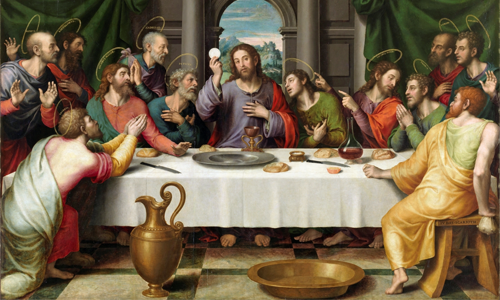
Service: At the Last Supper, Jesus did more than break bread and share the cup; he washed the feet of his disciples. In his gospel, John does not have the institution narrative; he describes Jesus washing his disciples’ feet. For John, the towel and basin are Eucharistic symbols.
Self-gift, sacrifice, service! This is what we celebrate. This is our challenge.
Am I willing to give myself for others? What are the “five loaves and two fish” I am called to share with others? How can I be body broken and blood shed for others? In what way will I serve and love others?
May we relive Jesus’ self-gift, sacrifice and service so that we too can say: “I have nothing more to give you.”
(Courtesy: Dr Fr Vinod SDB)