
Author: William Kamkwamba and Bryan Mealer
Summary by Fr Dr CP Anto
About the Book
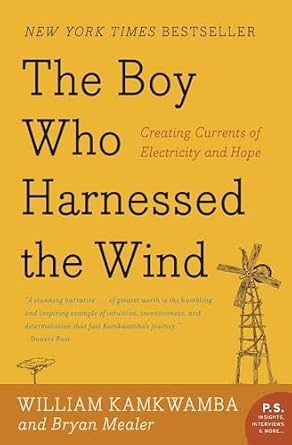
The Boy Who Harnessed the Wind is an inspiring true story about William Kamkwamba, a young boy from Malawi, Africa, who used his curiosity, determination and creativity to bring change to his community.
During a severe famine, William’s family struggled financially, and he could no longer afford to attend school. However, he refused to give up on learning. Using books from a local library and discarded materials, he taught himself how to build a windmill that generated electricity and helped provide water for his village.
His journey demonstrates how knowledge, creativity and determination can help individuals overcome difficult circumstances and contribute to their communities.
7 Lessons We Can Learn from the Book
1. Education Can Transform Lives
Education is not limited to classrooms, examinations or certificates. William demonstrated that learning can happen anywhere when a person has curiosity and determination. Knowledge gives individuals the ability to understand problems, explore possibilities and create solutions that can improve their lives and communities.
2. Difficult Circumstances Should Not Define Our Future
William experienced poverty, hunger and the inability to continue his formal education. However, he did not allow these circumstances to determine what he could achieve. His story teaches us that although we cannot always control our situations, we can continue looking for opportunities to move forward.
3. Creativity Can Solve Real-Life Problems
William did not have expensive equipment or advanced technology. Instead, he used available resources and his imagination to construct a windmill. This teaches us that innovation does not always require significant financial investment. Sometimes, practical solutions emerge from observing everyday problems and thinking differently.
4. Determination Is Stronger Than Discouragement
William faced criticism and doubt from people around him, but he continued working towards his goal. His experience reminds us that meaningful achievements often require patience and persistence. We should not abandon worthwhile ideas simply because others fail to understand them initially.
5. Community Development Begins with Understanding Community Needs
William’s invention was not simply about achieving personal success. It addressed practical challenges faced by his family and community. This demonstrates the importance of identifying people’s actual needs before introducing solutions. Development becomes meaningful when it improves everyday living conditions.
6. Limited Resources Do Not Mean Limited Potential
The story highlights how individuals living in economically disadvantaged communities can possess remarkable abilities and ideas. A lack of resources should not be mistaken for a lack of intelligence or potential. Providing access to education, information and opportunities can help people discover and develop their abilities.
7. One Individual Can Inspire Collective Change
William’s achievement began with one person’s determination, but its impact extended beyond him. His story inspired others and demonstrated the possibilities of using knowledge to address community challenges. It teaches us that even small individual efforts can encourage wider social transformation.
Reflection
This book reminds us that extraordinary change does not always begin with extraordinary resources. Sometimes, it begins with an ordinary person who refuses to accept that a problem has no solution.
William’s journey encourages us to recognise the potential that exists within individuals and communities, particularly those facing economic and social difficulties.
It also challenges us to think about how education, access to information and opportunities can empower people to become active participants in improving their own circumstances.
Central Message
Your circumstances may limit your opportunities, but they do not have to limit your potential. Knowledge, creativity and determination can turn challenges into opportunities and individual ideas into meaningful community change.
5 Questions for Personal Reflection
1. What does education mean to me?
2. How do I respond to difficulties?
3. Can I find solutions with limited resources?
4. How can my knowledge help others?
5. What positive change can I initiate?
Thought for the Day: “You don’t need to have everything to make a difference. Sometimes, you only need the courage to begin with what you have.”