
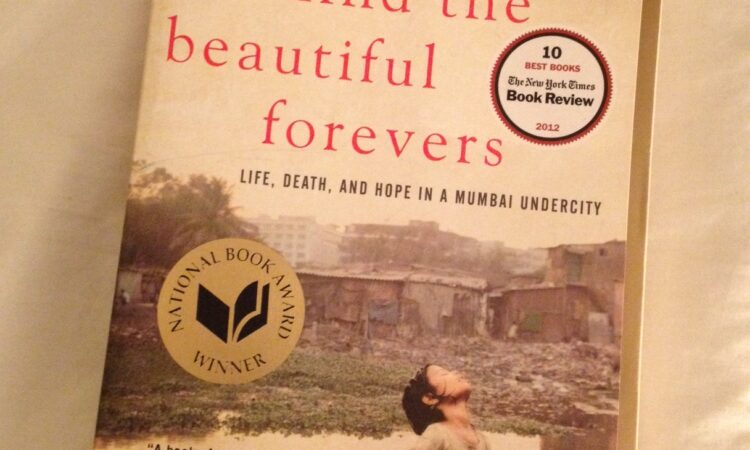
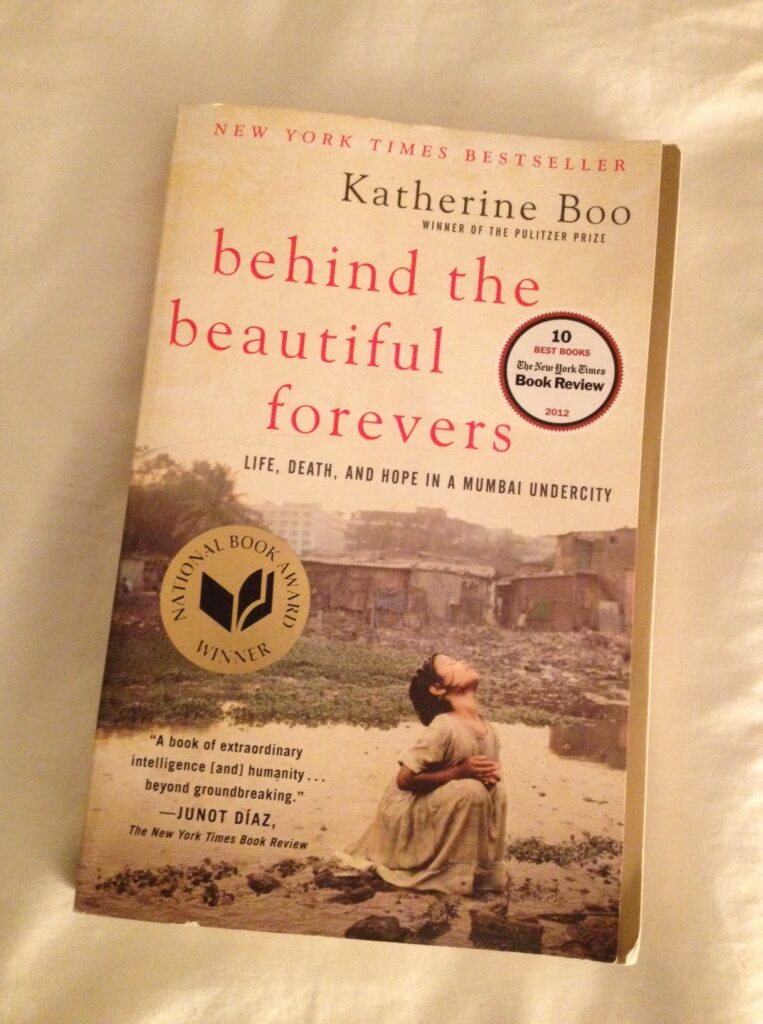
Book of the day – Behind the Beautiful Forevers
Author: Katherine Boo
Subtitle: Life, Death and Hope in a Mumbai Undercity
Genre: Social Issues, Poverty, Inequality and Narrative Non-fiction.
Setting: Annawadi, a settlement near Mumbai Airport, India.
Summary by Fr Dr CP Anto
About the Book
This book explores the lives of people living in Annawadi, a poor settlement surrounded by luxury hotels and modern buildings in Mumbai.
Through real-life stories, Katherine Boo reveals the struggles of families dealing with poverty, unemployment, corruption, discrimination, poor living conditions and limited opportunities.
The book follows people who dream of a better future despite facing enormous social and economic challenges. It demonstrates how poverty affects not only individuals but also families, relationships, education and entire communities.
Penguin Random House India
7 Lessons Learned
1. Poverty Is a Social Problem, Not Just an Individual Failure
One of the most important lessons is that poverty should not be viewed as the result of laziness or a lack of effort. Many people remain poor because of unequal opportunities, unemployment, discrimination and inadequate access to basic resources. Social workers must understand the social and economic circumstances that contribute to poverty rather than blaming individuals.
2. Every Individual Deserves Dignity and Respect
People living in slums and disadvantaged communities are often judged by their financial conditions. However, poverty does not reduce a person’s worth or dignity. Social workers must treat every individual with respect, regardless of their economic background, education, caste, religion or social position.
3. Social Inequality Limits Opportunities
The book illustrates how people living in the same city can experience completely different realities. While some enjoy comfort and privilege, others struggle to access clean water, healthcare, education and employment. This teaches us that equality requires more than treating everyone alike; it requires addressing the barriers that prevent disadvantaged communities from progressing.
4. Education Can Become a Powerful Tool for Social Change
Education gives individuals the opportunity to improve their circumstances and build a better future. However, children from economically disadvantaged families often face obstacles such as financial difficulties, family responsibilities and inadequate educational facilities. Social workers must advocate for accessible and inclusive education.
5. Understanding a Community Is Essential Before Helping It
Social workers should never make assumptions about a community based on its appearance or living conditions. They must understand people’s experiences, needs, culture, strengths and challenges. Effective intervention begins with listening to people and involving them in decisions that affect their lives.
6. Social Justice Requires Challenging Unfair Systems
The book highlights how corruption, discrimination and unequal access to public services can prevent people from receiving justice. It reminds us that social work is not limited to helping individuals overcome difficulties. It also involves advocating for policy changes, protecting rights and challenging systems that perpetuate inequality.
7. Hope and Resilience Exist Even in Difficult Circumstances
Despite poverty and hardship, people continue to dream, work, support their families and search for better opportunities. Their determination demonstrates the importance of human resilience. Social workers should recognise people’s strengths and abilities rather than focusing exclusively on their problems.
Reflection
Behind the Beautiful Forevers provides an eye-opening understanding of the realities faced by people living in poverty. It reminds us that behind every statistic about poverty, unemployment or inequality, there are real individuals with families, dreams, emotions and aspirations.
this book encourages us to look beyond visible problems and understand the deeper social structures responsible for them. It also reminds us that our responsibility is not simply to provide temporary assistance but to work towards creating opportunities, protecting human dignity and promoting social justice.
As future social workers, we must develop the ability to listen without judging, understand without assuming and help without discriminating. Most importantly, we must recognise that people experiencing poverty are not helpless individuals; they are people with strengths, abilities and the potential to bring change to their own lives.
Central Message
“To understand society, we must first understand the lives of those who are often ignored by it.”
Social work recognises human dignity, challenges inequality, and creates a society where every individual has the opportunity to live with respect, security, and hope.